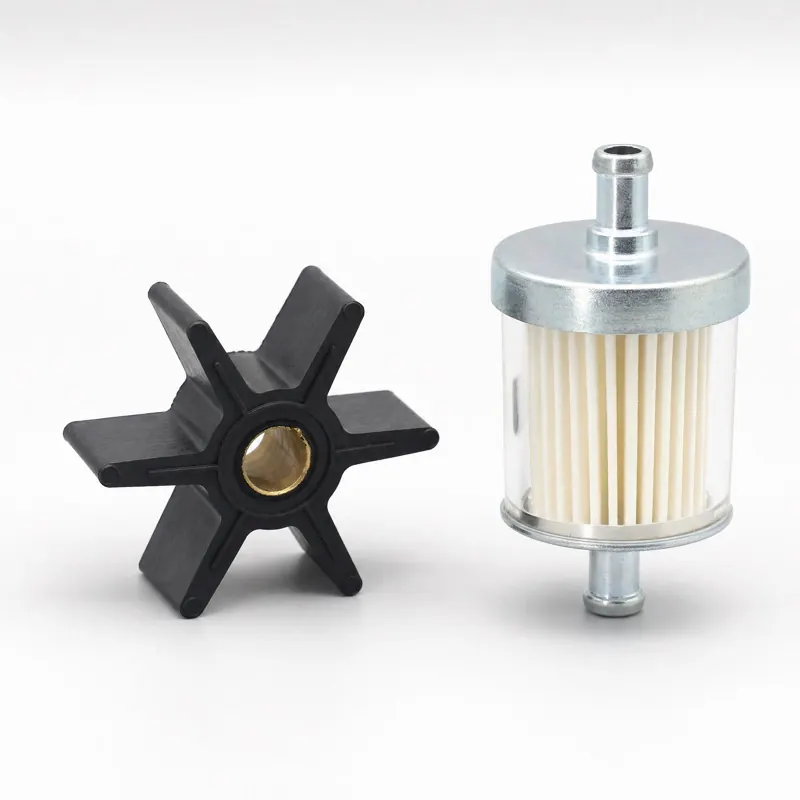
Boat engines rarely die from bad parts. They die from bad fuel. And the first line of defense against water, crud and algae in your gas is the marine fuel filter - usually a fuel-water separator mounted near the engine or tank. Here's how to read the symptoms and keep yours on the job.
Why marine fuel goes bad faster
Boat fuel sits in a ventilated tank with temperature swings and condensation - the perfect recipe for water. Ethanol-blended fuel makes it worse by absorbing moisture directly from the air. That water sinks to the bottom of the tank and gets pulled straight into your engine's fuel system, where it does the most damage. Carbureted engines sputter; injected engines misfire and the pump strains; both can strand you.
Symptoms of a clogged fuel water separator
- Engine sputters or surges at cruising speed, smooth at idle
- Hard starting after the boat sits - the filter has to prime past contamination
- Loss of top-end RPM you can't explain from load or trim
- White or milky fuel visible in a clear bowl - that's water, and it needs attention now
- Visible crud, rust particles or algae 'snot' when you service it
When to replace
Consumer-grade: replace your fuel filter every 100 hours or once a season, and always at the start of the season if it ran on old fuel. Volvo Penta and MerCruiser sterndrives commonly spec 100-hour replacement; outboard manufacturers publish similar intervals for their water-separating filters. If you ever run a tank of bad gas, replace it then - don't wait for a schedule.
DIY service in five steps
- Close the fuel valve or clamp the line (and let the engine cool)
- Unscrew the filter bowl - catch the fuel in a container and dispose of it properly
- Inspect the bowl and o-ring; clean both, replace the o-ring if hard or cracked
- Fill the new filter with fresh fuel to ease priming (check your engine's spec)
- Hand-tighten, open the valve, and run the engine - check for leaks and a steady idle
We carry the filters you need
In stock at Michigan Marine Gear: MerCruiser, Volvo Penta, Mercury, Yamaha and Suzuki fuel filters and water separators, with o-rings and clamps. Shop fuel filters - or let our shop handle it during your seasonal service. Questions? Call (586) 772-5556.